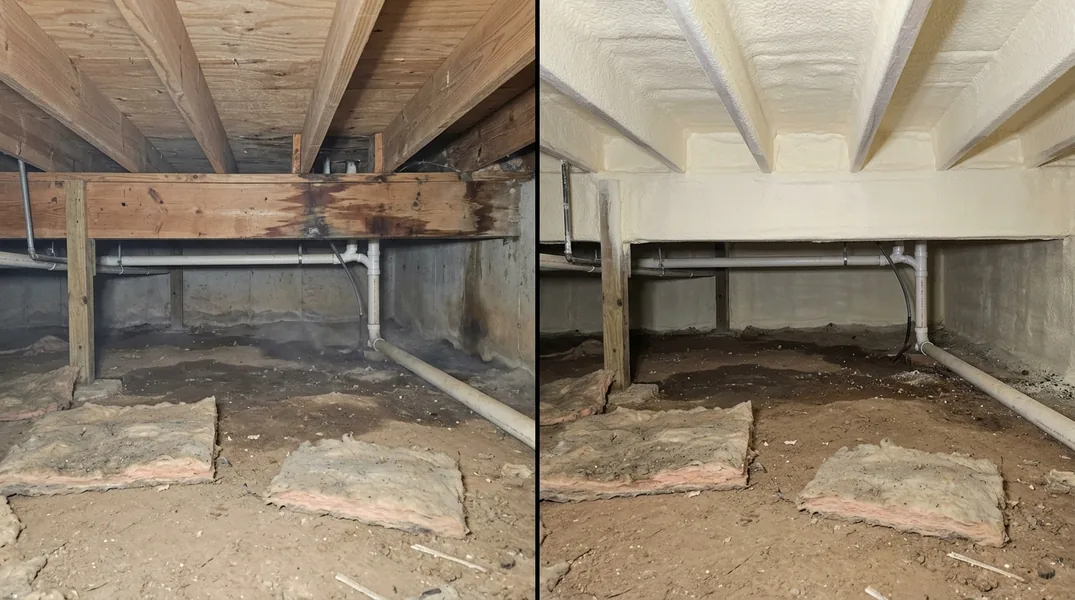
Why Tyler Homeowners Are Investing in Spray Foam Insulation
If you live in Tyler, you know that summer cooling bills can be brutal. The Texas heat doesn't forgive poor insulation, and many homeowners find themselves paying premium rates to keep their homes comfortable. This is where Attic Spray Foam Insulation becomes a game-changer for your budget and comfort.
Traditional fiberglass insulation has served homes for decades, but it has significant limitations. It settles over time, leaves gaps around penetrations, and doesn't seal air leaks the way modern spray foam does. When you're dealing with the intense heat that Tyler experiences, those gaps and weak spots mean your air conditioning system works overtime, burning through energy and money. Spray foam insulation addresses these problems directly by creating an airtight seal that traditional materials simply cannot match.
The real appeal isn't just comfort, though. It's the financial return. Homeowners who upgrade their attic insulation with spray foam consistently report cooling bill reductions of 15 to 30 percent, depending on their current insulation condition and home size. For families spending $200 to $300 per month on cooling during peak summer, those savings add up quickly.
Understanding Spray Foam Insulation Cost in Tyler: What to Budget
When you're evaluating spray foam insulation cost, you'll encounter two main types, each with different price points. Open Cell Spray Foam Insulation is the more affordable option, typically running $0.50 to $1.00 per square foot. It's lighter, easier to install, and works well for interior applications where vapor barriers aren't a primary concern. Closed Cell Spray Foam Insulation costs more, generally between $1.00 and $2.00 per square foot, but it offers superior R-value per inch, moisture resistance, and structural support.
For a typical attic in Tyler, the cost to insulate attic space ranges from $1,500 to $5,000 or more, depending on square footage and the type of foam selected. An average 1,500-square-foot attic with open cell foam might cost around $2,250 at the lower end, while the same space with closed cell foam could reach $3,500 to $4,500. These numbers matter, but they're only half the story. What truly counts is how quickly that investment returns to your wallet through lower energy bills.
To get an accurate picture of what you'll spend, request a free estimate from Tyler Spray Foam Insulation. Our team will assess your current insulation, measure your attic, and provide a detailed breakdown of costs tailored to your home. You can reach us at (430) 205-3083 to schedule your consultation.
How the Payback Works: Calculating Your Return on Investment
The payback period for spray foam insulation is one of the most compelling reasons homeowners choose this upgrade. Let's use a realistic example. Suppose your current cooling bills average $250 per month during the six-month cooling season in Texas, totaling $1,500 annually. If spray foam insulation reduces that bill by 20 percent, you save $300 every year. On a $3,000 investment, that's a payback period of just 10 years, and you're living in a more comfortable home from day one.
But the math gets even better when you account for rising energy costs. Electricity rates have climbed steadily over the past decade, and that trend is expected to continue. If energy costs rise by just 3 percent per year, your annual savings grow from $300 in year one to $320 in year five, $340 in year ten, and beyond. Over a 20-year period, which is typical for spray foam's lifespan, those compounding savings can exceed $8,000 on that same $3,000 investment.
Many homeowners also forget to factor in the comfort improvements and potential home value increase. A well-insulated attic means fewer hot spots in summer, more consistent temperatures throughout your home, and reduced strain on your HVAC system. Some studies suggest that energy-efficient upgrades like spray foam insulation can add 50 to 100 percent of the installation cost back to your home's resale value. That means your $3,000 investment might add $1,500 to $3,000 to your home's market value when you eventually sell.
Closed Cell vs. Open Cell: Choosing the Right Foam for Your Budget
Closed Cell Spray Foam Insulation is denser and more expensive, but it delivers superior performance in hot, humid climates like ours. It has an R-value of approximately 6.0 to 7.0 per inch, meaning you need less thickness to achieve the same insulation value. In an attic where space might be tight or where you want maximum efficiency, closed cell foam makes sense. It also resists moisture better, which is valuable in areas prone to humidity or potential water intrusion.
Open Cell Spray Foam Insulation, on the other hand, offers an R-value of about 3.5 to 4.0 per inch. You'll need more thickness, but the lower material cost and installation expense make it attractive for homeowners on tighter budgets. Open cell foam is also lighter and doesn't provide the same structural benefits, but for pure insulation performance in a dry attic space, it performs admirably.
The choice between the two depends on your budget, your attic's condition, and your long-term goals. If you're prioritizing the lowest upfront cost and your attic is dry and well-ventilated, open cell foam offers excellent value. If you want maximum efficiency, moisture protection, and are willing to invest more upfront for faster payback, closed cell is the premium choice. Either way, you're making a decision that will pay dividends for years to come.
Real-World Savings: What Tyler Homeowners Are Actually Experiencing
Numbers on a spreadsheet are helpful, but real-world results speak louder. Homeowners throughout Tyler who've installed spray foam insulation report consistent, measurable reductions in their energy bills. A family in a 2,000-square-foot home with a poorly insulated attic might spend $350 per month cooling their house during July and August. After spray foam installation, that same family often sees bills drop to $270 to $300 per month, a difference of $50 to $80 monthly during peak season.
What's particularly interesting is that these savings don't just appear in summer. Spray foam also improves winter heating efficiency, though the effect is less dramatic in our climate. More importantly, the comfort improvements are immediate. Homeowners report fewer drafts, more even temperature distribution, and reduced noise from outside. Your air conditioning system also runs more efficiently, which means less wear and tear and potentially lower maintenance costs over time.
The psychological benefit shouldn't be overlooked either. Knowing that your home is properly sealed and insulated provides peace of mind. You're not losing conditioned air through gaps and cracks. Your HVAC system isn't working against a losing battle. That sense of control over your home environment and your utility costs is valuable in ways that go beyond the dollar savings.
Getting Started: Your Next Steps Toward Lower Cooling Bills
If you're convinced that spray foam insulation makes financial sense for your home, the next step is simple. Contact Tyler Spray Foam Insulation to schedule a consultation. Our team will evaluate your current insulation, discuss your budget and goals, and provide a detailed estimate. We serve Tyler and surrounding areas, and we're committed to helping you make an informed decision about this important investment.
You can reach us at (430) 205-3083 or visit our website at https://tyler-spray-foam.com to request a free estimate. There's no obligation, and you'll walk away with a clear understanding of what spray foam insulation costs, how much you'll save, and how long the payback will take for your specific situation. Whether you choose Open Cell Spray Foam Insulation or the premium performance of closed cell, you're making an investment that will pay for itself while improving your comfort and home value. The time to act is now, before another hot Tyler summer drains your wallet.
Looking for a professional spray foam insulation contractor in Tyler? Tyler Spray Foam Insulation responds fast for all your spray foam insulation needs.
Get a Free Quote