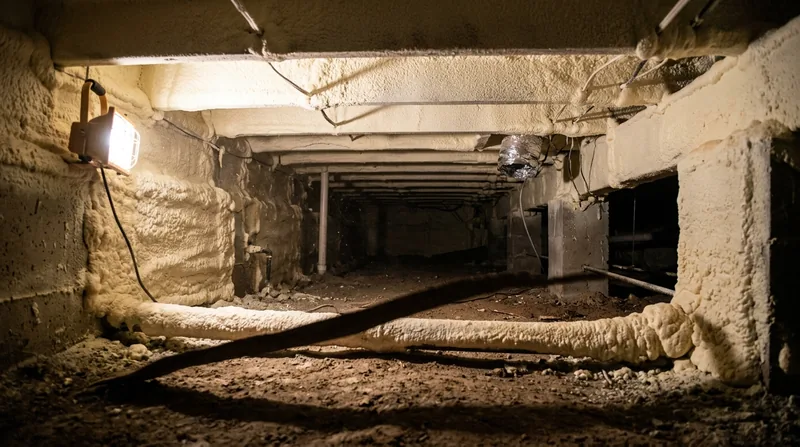




Pier-and-beam homes across Tyler's Azalea District and throughout Smith County sit over vented crawl spaces that pull in damp ground air year-round. The humid East Texas climate and the Piney Woods terrain mean that crawl space spray foam insulation in Tyler is not a luxury upgrade but a moisture control necessity. We spray closed-cell or open-cell foam across the crawl space walls, the band joist, and the rim beam, sealing off the damp air path that fiberglass batts and blown-in insulation cannot stop. A properly sealed crawl space keeps your subfloor dry, reduces the load on your air conditioner, and stops the musty smell that vented crawl spaces bring into the house every summer. We have been closing crawl spaces across Greater Tyler since 2010, and we walk you through the process with written estimates that specify R-value and foam thickness.
Why Crawl Space Spray Foam Insulation Matters in Tyler's Humid Climate
Tyler and the surrounding Piney Woods sit in IECC climate zone 3A, with hot humid summers, mild winters, and moisture that stays high nearly year-round. Vented crawl spaces under older brick homes and pier-and-beam structures were built to allow air circulation, but that circulation brings in ground moisture, warm humid air, and the conditions that rot subfloors and breed mold. In summer, the vapor drive is inward: warm air from outside pushes moisture into the cooler crawl space, where it condenses on cool surfaces and soaks into wood. Fiberglass batts and open-cell foam cannot stop that moisture. Closed-cell spray foam seals the walls, the band joist, and the rim beam, breaking the moisture path and keeping the crawl space dry.
- Sealed crawl spaces stop ground moisture from entering the subfloor and the living space above.
- Foam insulation reduces the humidity load your air conditioner must handle during the long cooling season.
- A dry crawl space prevents wood rot, mold growth, and the musty odor that vented crawl spaces pull into the house.
- Sealing the rim and band joist stops air leakage that bypasses your attic insulation and ductwork.
- Properly installed foam improves indoor air quality and reduces the risk of moisture-related damage to stored items.
Crawl space insulation is the foundation of a moisture-controlled home in Tyler, and spray foam is the only insulation product that seals against humidity and stops the air leakage that fiberglass and blown-in products leave behind.
Key info: Tyler's older Azalea District homes and the pier-and-beam stock throughout Whitehouse, Lindale, and Chapel Hill all sit over vented crawl spaces that pull in damp air. We inspect the crawl space, check for standing water or active leaks, and seal the space with closed-cell or open-cell foam before we spray. If the substrate is wet, we do not spray. We fix the moisture first or we walk away.
For more information on how spray foam works in attics and sealed roof decks, see our Attic Spray Foam Insulation page, and for technical details on closed-cell foam and its R-value, visit Closed Cell Spray Foam Insulation.
How We Seal Your Crawl Space: Our Process in Tyler
Crawl space spray foam insulation is a straightforward process when done correctly. We start with a site visit to assess the crawl space, check for moisture, standing water, or active leaks, and measure the perimeter and height of the space. We take photographs and provide a written estimate with the R-value, foam thickness, and the square footage we will cover. Once you approve, we set a spray date and bring in our rig and crew.
- We inspect the crawl space, document moisture conditions, and confirm the substrate is dry and ready to receive foam.
- We seal all mechanical penetrations, rim joists, and band joists with foam to stop air leakage and moisture entry.
- We spray closed-cell or open-cell foam on the crawl space walls, typically 3.5 to 5.5 inches thick, depending on your R-value target.
- We ensure proper spray technique: controlled thickness per pass, correct drum temperature, and the manufacturer-specified mix ratio.
- We provide mechanical ventilation during cure and specify a re-entry window of 24 to 48 hours before normal occupancy.
- We clean up debris and leave your crawl space sealed, dry, and ready for the humid East Texas summer.
The entire process typically takes one to two days, depending on crawl space size and complexity. You will receive a detailed invoice and photos of the finished work.
Example: A 1,200-square-foot crawl space under a brick home in Tyler's Azalea District, with a 2.5-foot average height and exposed rim joists, typically receives 3.5 inches of closed-cell foam on all walls and the band joist area. The job takes one day, costs from $2,500 to $3,200 depending on access and the exact perimeter, and cuts the moisture load on the air conditioner by 30 to 40 percent.
For details on how we approach air sealing alongside foam insulation, see Air Sealing in Tyler. If your crawl space requires removal of old fiberglass or blown-in insulation first, visit our Insulation Removal page.
Crawl Space Spray Foam Methods and Materials
| Approach | Description | Best for |
|---|---|---|
| Closed-Cell Spray Foam | Dense, rigid foam with an R-value of 6 to 7 per inch; acts as a vapor barrier and air seal in one pass. | Crawl spaces in humid climates; rim and band joists; spaces where moisture control is the primary goal. |
| Open-Cell Spray Foam | Lighter, softer foam with an R-value of 3.5 to 4 per inch; allows moisture vapor to pass through; lower cost per board foot. | Crawl spaces where vapor permeability is acceptable; budget-conscious retrofit jobs; spaces with good natural drainage. |
| Rim Joist and Band Joist Sealing | Targeted foam application to the perimeter band joist and rim beam; stops air leakage and moisture entry at the foundation line. | Homes with pier-and-beam foundations; attic bypass prevention; energy retrofit on existing homes. |
| Full Crawl Space Encapsulation with Foam | Foam applied to all crawl space walls, the band joist, and rim beam; creates a complete thermal and moisture seal. | Older vented crawl spaces with chronic moisture problems; homes in humid zones like Tyler; comprehensive moisture control retrofit. |
Crawl Space Spray Foam Insulation Cost in Tyler: What to Expect
Crawl space spray foam insulation in Tyler typically starts at $2,500 for a small to medium crawl space and can range from $2,500 to $4,500 or more for larger spaces or complex access conditions. The cost depends on the square footage of wall area to be covered, the average height of the crawl space, the R-value target, the type of foam (closed-cell or open-cell), and whether the space requires removal of old insulation first. Access is a major factor: a crawl space with a full-size opening and level floor costs less than one with a small hatch, narrow clearance, or uneven terrain. Moisture conditions also matter: if we find standing water or active leaks, those must be addressed before foam is sprayed, and that work may be separate.
We recommend getting two or three written estimates from local contractors before you decide. Each estimate should specify the R-value, the foam thickness in inches, the square footage of coverage, and the total cost. A vague estimate with no R-value and no thickness is a red flag. We provide written estimates at no cost and with no obligation to book. Call us at (430) 205-3083 or visit our Pricing page for more detail on what moves the cost up or down.
Crawl space insulation is one of the highest-return energy upgrades in East Texas. The cost is recouped through lower cooling bills over three to five years, and the moisture control benefit is permanent. If your crawl space is pulling in humid air and your air conditioner is working overtime, spray foam is the right answer.
What to Look for When Hiring a Spray Foam Contractor Near Me in Tyler
The spray foam insulation market in Tyler and across East Texas includes local independent shops, national franchises, and out-of-state rig-and-run crews. The difference in quality and accountability is enormous. A good contractor is one you can reach after the job is done, who provides a written estimate with R-value and thickness, who verifies insurance before the first spray, and who stands behind the work. Here is what to verify before you hire anyone.
- Confirm the contractor is fully insured and ask for a certificate of insurance that covers the specific work you are contracting for.
- Ask your contractor whether your city or county requires contractor registration before work begins, and verify that any required registration is current and valid.
- Get a written estimate that specifies the R-value, foam thickness in inches, the square footage of coverage, and the total cost with no hidden fees.
- Check references and ask to speak with homeowners in Tyler, Whitehouse, or Lindale who had crawl space work done in the past two years.
- Verify that the contractor uses mechanical ventilation during cure and specifies a realistic re-entry window of 24 to 48 hours, not immediate occupancy.
- Ask whether the contractor has addressed moisture or standing water issues before, and whether they will inspect and walk away if the substrate is wet.
A local contractor with a local address and local plates is your best bet. We have been in Tyler since 2010, we respond to calls within 24 hours, and we provide a one-year workmanship warranty on every job. If you are ready to get started, contact us for a free estimate.
Crawl Space Spray Foam Insulation in Tyler: Pricing Guide
| Service | Price | Details |
|---|---|---|
| Small crawl space (500-800 sq ft wall area) | Starting at $2,500 | Closed-cell or open-cell foam, 3.5 to 4 inches, rim and band joist sealed, includes mechanical ventilation during cure |
| Medium crawl space (800-1,200 sq ft wall area) | Starting at $3,200 | Full wall coverage, 3.5 to 5.5 inches thick, access determines final cost; larger perimeter or difficult hatch increases price |
| Large crawl space or complex access (1,200+ sq ft, narrow hatch, uneven terrain) | On estimate | Site visit required; standing water, old insulation removal, or structural work quoted separately; final price after inspection |
| Rim and band joist only (no full crawl space) | Starting at $1,200 | Targeted sealing of perimeter band joist and rim beam; ideal for attic bypass prevention on existing homes |
| Travel and estimate | Free and included | No mileage or call-out fee in Tyler and surrounding areas; 24-hour response time on estimate requests; (430) 205-3083 |
Indicative pricing, the exact cost depends on square footage, finish, and site access. Free personalized estimate within 24h at (430) 205-3083.


