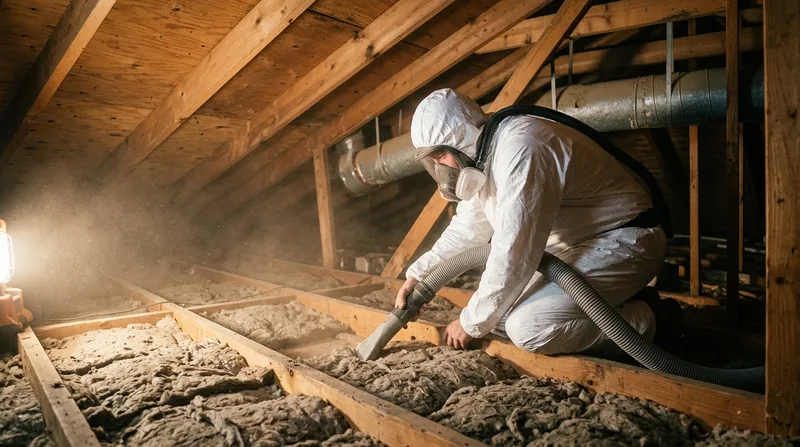




In the rolling Piney Woods of East Texas, old attic insulation in Tyler's mid-century slab-on-grade ranches has flattened under decades of ductwork and summer heat. Moisture-damaged fiberglass, pest contamination, and compression from HVAC runs are routine findings in vented attics across the Azalea District and the subdivisions of Whitehouse, Lindale, and Chapel Hill. Before new insulation removal in Tyler or spray foam can go in, the failed material has to come out cleanly and safely. We remove old, saturated, or contaminated insulation from attics and crawl spaces so your home can be re-insulated right. With a free estimate and a transparent process, we help Tyler homeowners understand what's there, why it failed, and what the next step costs.
Why Insulation Removal Matters in Tyler's Hot, Humid Climate
Tyler sits in IECC climate zone 3A with hot, humid summers that run from April through October and the occasional ice storm in winter. Vapor drives inward during the cooling season, and vented attics pull damp ground air upward through crawl spaces all year. When old fiberglass insulation absorbs that moisture, it loses R-value, sags under its own weight, and becomes a harbor for mold and dust mites. Ductwork laid directly on batts compresses them to half their rated thickness, cutting their insulating power in half. Rodent droppings, urine staining, and nesting material contaminate the entire cavity. Removing this failed material is not optional if you want new foam to work.
- We haul out compressed fiberglass, wet cellulose, and rodent-contaminated batts from vented attics before new foam is installed.
- We vacuum and bag loose-fill material from crawl spaces so foam can bond to a clean substrate without trapping moisture.
- We dispose of old insulation legally and remove debris from the site, leaving the cavity ready for new work.
- We document what we remove and photograph the substrate so you know exactly what condition existed before new insulation went in.
Proper removal protects your investment in new foam and ensures the air sealing actually holds.
Key info: In Tyler's pier-and-beam homes and older Azalea District residences, crawl space insulation often sits directly on damp soil or over standing water. We will not spray foam over a wet substrate. If moisture is present, we walk away and refer you to the right contractor. That honesty is the mark of a shop that will be here when you need us.
For more detail on what happens after removal, see our attic spray foam insulation page or call us at (430) 205-3083 for a free estimate.
How We Remove Insulation in Tyler: Step by Step
Removal is a methodical process that protects your home and the crew. We seal off the work area with plastic sheeting to contain dust and debris, set up mechanical ventilation to pull air out of the cavity and away from living spaces, and use commercial vacuum equipment to extract loose-fill or batts. We bag all material for proper disposal, inspect the substrate for moisture or damage, and document the condition with photographs. The timeline depends on the attic size, the type and depth of insulation, and access. A typical 1,500-square-foot attic takes one to two days.
- We inspect the attic or crawl space to identify the insulation type, depth, and any visible moisture or contamination.
- We set up containment and mechanical ventilation so dust stays out of your home and the crew stays safe.
- We remove batts, rolls, or loose-fill using commercial equipment and bag it for disposal.
- We clean the substrate and check for roof leaks, ductwork damage, or structural issues that need attention before new foam.
- We provide a written report with photographs so you have a clear record of what was removed and the condition underneath.
Once the cavity is clean and dry, we can move forward with new spray foam or other insulation.
Local example: A 1970s ranch in Bullard with a vented attic had fiberglass batts compressed to 2 inches under flexible ductwork. The material was damp and matted, R-value was near zero. We removed it, cleaned the deck, and installed 5.5 inches of closed-cell foam sealed to the roof deck. The homeowner's cooling bills dropped and the house stayed dry all summer. That is the payoff of doing removal right.
See our insulation replacement page for what comes next.
Insulation Removal Methods: When to Use Each
| Approach | Description | Best for |
|---|---|---|
| Vacuum extraction with containment | Commercial HEPA vacuum with plastic sheeting and mechanical exhaust, removes loose-fill or batts without dust entering the home. | Vented attics with blown-in cellulose or fiberglass; crawl spaces with loose material. |
| Batt removal and bagging | Manual removal of fiberglass or rock-wool batts, rolled into bags for disposal, best for older homes where batts were laid over solid decking. | Attics with batts or rolls; pier-and-beam homes with crawl space batts over joists. |
| Damp material removal with drying | Wet or moisture-saturated insulation is removed, the substrate is dried with fans and dehumidifiers, and the cavity is inspected for roof leaks or condensation sources. | Attics with roof leaks; crawl spaces with high humidity or minor standing water. |
| Contaminated insulation removal | Material with rodent droppings, urine, or mold is removed with full containment, bagged separately, and disposed of as hazardous waste where required by local code. | Attics or crawl spaces with pest contamination; homes where occupants have respiratory sensitivity. |
| Substrate preparation for foam | After insulation removal, the deck or joist cavity is swept, vacuumed, and inspected for cracks, holes, or voids that affect foam adhesion and coverage. | Any attic or crawl space slated for spray foam installation; ensures maximum R-value and air-sealing performance. |
Each method is chosen based on the insulation type, the cavity condition, and whether new foam will follow. We explain the approach in your free estimate.
Insulation Removal Cost in Tyler: What to Expect
The cost of insulation removal in Tyler depends on the attic or crawl space size, the insulation type and depth, accessibility, and whether the material is contaminated. A straightforward attic removal with standard fiberglass batts starts at $950 and increases with square footage and complexity. Crawl space removal with loose-fill material or damp batts may run higher due to the difficulty of access and the need for drying or containment. Contaminated material (rodent droppings, mold) may require special bagging and disposal, which adds cost. We provide a written estimate on site with no obligation, and we include a photograph and a description of what will be removed and how.
- Attic removal with fiberglass batts typically runs from $950 to $2,500 depending on square footage and ductwork layout.
- Crawl space removal with loose-fill or batts starts at $1,200 and rises with depth and access difficulty.
- Damp or contaminated material removal costs more due to containment, special disposal, and drying time.
- Larger homes in Whitehouse, Lindale, and Chapel Hill with complex attic configurations may require two days, which affects labor cost.
- Travel is included in Tyler and surrounding areas, with no separate mileage fee.
The best way to understand your cost is to call (430) 205-3083 for a free estimate. We will walk the space, explain what we find, and give you a firm price before work begins.
For a full pricing overview and financing options, visit our pricing page.
What to Look for When Hiring an Insulation Removal Contractor Near Tyler
Not all insulation removal shops are the same. Some are rig-and-run crews from out of state that spray foam in an afternoon and disappear. Others are national franchises with high overhead and little local accountability. A local, independent contractor with a Tyler address and local plates has skin in the game and will be here when you need follow-up. When you call any contractor, ask for proof of insurance, a written estimate with R-value and thickness specs for new work, and references from recent jobs. Verify that the contractor understands your city's permitting and registration requirements. Ask how they handle moisture, what warranty they offer on workmanship, and whether they provide a re-entry window and ventilation plan during cure.
- Confirm that the contractor is fully insured and can provide a certificate of insurance before work starts.
- Get at least two written estimates that include the insulation type, R-value, thickness, and labor cost.
- Ask for references from homeowners in Tyler, Whitehouse, Longview, or Henderson where they have done removal and foam installation.
- Understand what your city or county requires for contractor registration before hiring anyone, and verify the contractor meets those requirements.
- Ask about the re-entry timeline after foam cure, the ventilation plan during application, and the workmanship warranty in writing.
- Be wary of estimates with no R-value spec, promises of lifetime warranties, guaranteed energy savings, or prices far below market.
A contractor who explains the job honestly, walks the space in person, and gives you a detailed estimate is the one to trust.
For a free estimate and to discuss your project, contact us online or call (430) 205-3083. We have been in business since 2010 and serve Tyler and the surrounding area with integrity.
The Right Time for Insulation Removal in Tyler
Insulation removal can happen any time of year, but the timing depends on your cooling and heating load. In Tyler's hot, humid climate, cooling is the dominant expense from April through October. If your attic insulation is failing now, the longer you wait, the more your air conditioner works to compensate. Removal in spring or early summer, followed by new foam installation, positions you to capture the energy savings through the peak cooling months. In winter, removal is faster because the attic is cooler and crews can work more comfortably, but you miss the payoff during the high-use season. The best time is as soon as you discover the problem. Call us for a free estimate and we will help you plan the timeline that makes sense for your home and your budget.
Insulation Removal in Tyler: Pricing Guide
| Service | Price | Details |
|---|---|---|
| Attic insulation removal, standard fiberglass | Starting at $950 | Includes vacuum extraction, containment, and debris removal; cost increases with attic square footage and ductwork complexity |
| Crawl space insulation removal, loose-fill or batts | Starting at $1,200 | Includes access difficulty, drying time if damp, and disposal; tight crawl spaces or high moisture add to the cost |
| Contaminated material removal with special disposal | Starting at $1,500 | Rodent droppings, mold, or urine-stained insulation requires containment and hazardous disposal per local code |
| Large attic or multi-zone removal project | On estimate | Complex layouts, multiple zones, or mixed insulation types require on-site inspection and a detailed scope before pricing |
| Travel within Tyler and surrounding service area | Included | No separate mileage fee or travel charge to Whitehouse, Lindale, Bullard, Jacksonville, Longview, or Henderson |
| Free estimate with photographs and written report | Free | Response within 24 hours at (430) 205-3083, no obligation to book, includes substrate condition documentation |
Indicative pricing, the exact cost depends on square footage, finish, and site access. Free personalized estimate within 24h at (430) 205-3083.


