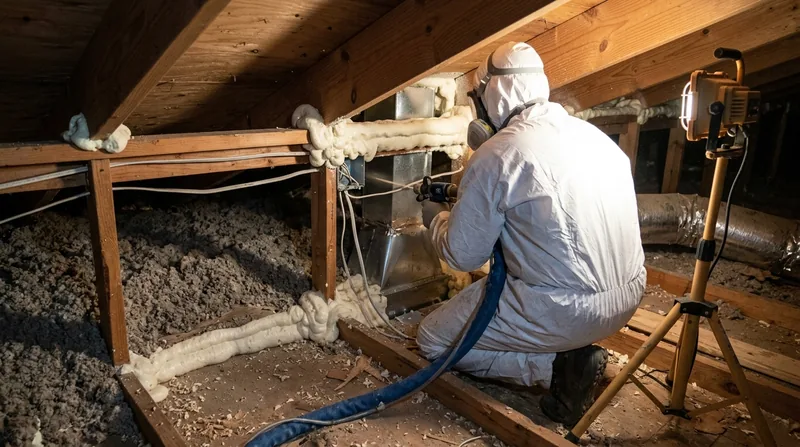




Air sealing in Tyler stops conditioned air from leaking out through attic and crawl space penetrations, and it stops humid Piney Woods air from leaking in. Vented attics and open crawl spaces across Smith County pull in moisture-laden air through top plates, rim joists, and unsealed gaps around ductwork, wiring, and plumbing. In the hot, humid East Texas climate, that inbound air works against your air conditioning system and drives up cooling costs through most of the year. We seal these penetrations with spray foam and caulk so your home stays tight, your humidity stays controlled, and your equipment runs easier. Air sealing is often the first step in a larger attic spray foam insulation project, but it stands alone as a high-value energy and moisture control measure.
Why Air Sealing Matters in Tyler's Hot, Humid Climate
Tyler sits in the rolling Piney Woods of IECC climate zone 3A, where hot summers and high humidity are the dominant forces shaping home performance. Older brick homes in the Azalea District rest over ventilated crawl spaces with bare subfloors that draw in damp ground air. Mid-century slab-on-grade ranches have vented attics where original insulation sits flattened under ductwork, baking in the heat. Newer subdivisions in Whitehouse, Lindale, and Chapel Hill bring two-story homes with bonus rooms and long duct runs through unconditioned attic space. In all these cases, the problem is the same: air leaks. Conditioned air escapes upward and outward, and humid outside air infiltrates through gaps, driving your cooling system harder and pulling moisture into the walls and attic where it does not belong.
- Vented attics pull in hot, humid air through penetrations around ductwork, wiring, and plumbing stacks.
- Crawl spaces under slab-on-grade homes draw in ground moisture through rim joist gaps and open vents.
- Unsealed top plates and band joists let conditioned air escape and outside air infiltrate into walls and floors.
- Duct leaks in unconditioned space waste cooled air before it reaches your rooms, forcing your AC to run longer.
- Moisture infiltration into attics and walls accelerates insulation degradation and creates conditions for wood decay.
Sealing these gaps and penetrations with spray foam stops the air leakage, reduces the load on your cooling system, and keeps humid air out of the building envelope.
Key info: In Tyler and surrounding East Texas counties, humidity stays above 60 percent for most of the year. Vented attics and open crawl spaces are the dominant failure mode, not heating loss. Air sealing stops inbound humid air before it reaches the insulation and structural framing where it causes damage.
For more detail on how moisture and air leakage interact with your insulation system, see our guide to crawl space spray foam insulation, where the same principles apply below the floor.
How We Seal Air Leaks in Tyler Homes
Air sealing starts with a walkthrough inspection. We identify the major air paths: top plate gaps where the attic meets the top of exterior walls, rim joist gaps in pier-and-beam homes, penetrations around ductwork and plumbing, and gaps where utilities enter the attic or crawl space. We measure, take notes, and estimate the board feet of foam needed. Then we spray closed-cell or open-cell foam into gaps, around penetrations, and along rim joists. The foam expands to fill voids and hardens into an air-tight seal. We follow the manufacturer's specifications for thickness, ratio, and drum temperature, and we ensure mechanical ventilation during cure so off-gassing is controlled. After cure, the sealed areas are invisible but functional: air cannot move through them, and moisture cannot infiltrate.
- We inspect the attic or crawl space to map all major air leakage paths and penetrations.
- We seal top plates where the attic meets the exterior wall with spray foam to stop air escape and infiltration.
- We spray around ductwork, plumbing, and electrical penetrations to close gaps that let air bypass them.
- We seal rim joists and band joists in crawl spaces and over garages to stop air and moisture infiltration from below.
- We provide written estimates with R-value and thickness specifications so you know exactly what you are getting.
The result is a tighter home that cools more evenly, costs less to run, and stays drier inside the building envelope.
Local example: A pier-and-beam home in Tyler's Azalea District with a bare subfloor and open crawl space vents typically has air leakage at the rim joist and gaps around the subfloor perimeter. We spray the rim joist and band joist areas with closed-cell foam, seal gaps where utilities enter, and close off the worst air paths. The homeowner reports lower humidity in the summer and noticeably cooler floors, because less humid crawl space air is entering the living space above.
Air Sealing Methods and Materials
| Approach | Description | Best for |
|---|---|---|
| Closed-cell spray foam | 1.5 to 2 pound density, R-value 6.0 to 6.5 per inch, rigid and waterproof when cured. | Rim joists, band joists, crawl spaces, and areas where moisture control and structural strength matter. |
| Open-cell spray foam | 0.5 to 0.7 pound density, R-value 3.5 to 3.7 per inch, softer and more flexible when cured. | Attic top plates, around ductwork, and interior wall penetrations where air sealing is the goal and cost is a factor. |
| Polyurethane caulk and backer rod | Low-expansion foam backer rod with polyurethane caulk for small gaps and trim work. | Sealing around electrical outlets, light fixtures, and small penetrations where spray foam would be overkill. |
| Combination approach | Spray foam for large voids and penetrations, caulk for trim and detail work, all specified in the estimate. | Complete air sealing jobs that combine multiple leak paths and require both coverage and precision. |
The choice between closed-cell and open-cell foam depends on the location and the moisture environment. In Tyler's humid climate, closed-cell foam in crawl spaces and rim joists gives you moisture resistance and structural support. Open-cell foam in attics is cheaper and still effective for air sealing when the space stays dry. We size the job and recommend the right material for the use case, not the highest price.
Air Sealing Cost in Tyler: What to Expect
Air sealing jobs in Tyler typically start at $650 and scale up based on the size of the space, the number and size of penetrations, and the material choice. A small attic top plate seal with open-cell foam might run $650 to $1,200. A complete rim joist and band joist seal in a crawl space, especially with closed-cell foam for moisture control, often runs $1,500 to $3,000 or more. Large commercial or multi-story jobs with extensive ductwork and plumbing penetrations can exceed that range significantly. The main factors that move the price are the square footage of the space, the linear feet of rim joist or top plate to seal, the number and size of penetrations, access difficulty, and whether you choose open-cell or closed-cell foam.
We provide written estimates with R-value and thickness specifications so you know what you are paying for. The estimate includes material, labor, and equipment. Travel is included in Tyler and surrounding areas. If you are comparing quotes, ask every contractor for the same detail: board feet of foam, thickness per pass, R-value, and material type. A low price without those specifications is a red flag. For a detailed breakdown of pricing across all our services, visit our pricing page.
What to Look for When Hiring an Air Sealing Contractor Near Tyler
Air sealing is not glamorous, but it is critical work, and the quality of the installation determines whether it actually stops air leakage or just looks like it does. When you are looking for an air sealing contractor near Tyler, start by asking for references from recent jobs in your neighborhood. Call them and ask whether the contractor showed up on time, whether the work was clean, and whether they followed up if there were questions after the job. Ask for proof of insurance and verify it is current. Get written estimates from at least two contractors, and make sure each one specifies the material, thickness, board footage, and R-value so you can compare apples to apples. Do not rely on a phone quote; a good contractor will walk the space and give you a detailed estimate on site. Ask about the cure time and the re-entry window, which should be 24 to 48 hours for most spray foam. Ask how they handle ventilation during cure and whether they can guarantee that off-gassing is controlled. If a contractor promises immediate re-entry or downplays the cure process, that is a warning sign. Finally, ask about permitting. In Tyler, some air sealing jobs may require a permit depending on the scope and your address. A good contractor knows the rules in your city and will help you navigate what applies. For a free estimate with no obligation, call us at (430) 205-3083 or request an estimate online.
Air Sealing in Tyler: Pricing Guide
| Service | Price | Details |
|---|---|---|
| Small attic top plate seal | Starting at $650 | Open-cell foam, 500 to 1,000 square feet, typical single-story attic with moderate penetrations |
| Rim and band joist seal, crawl space | Starting at $1,500 | Closed-cell foam, 800 to 1,200 linear feet, moisture control and structural support for pier-and-beam homes |
| Complete attic and crawl space air sealing | Starting at $2,500 | Combined top plate and rim joist sealing with multiple penetrations, two-story homes or complex layouts |
| Large commercial or multi-unit job | On estimate | Extensive ductwork, plumbing, electrical runs, multiple zones, requires on-site inspection and detailed takeoff |
| Travel and equipment | Included | No separate charge for service calls in Tyler and surrounding Smith, Van Zandt, and Gregg counties |
| Free estimate | No obligation | Written quote with R-value and thickness specs, response within 24 hours, (430) 205-3083 |
Indicative pricing, the exact cost depends on square footage, finish, and site access. Free personalized estimate within 24h at (430) 205-3083.


